Arabic Coffee (Gahwa): Traditions and How It’s Served
What Emirati gahwa is, how it’s brewed with cardamom and saffron, the etiquette of pouring and drinking it, and where to try Arabic coffee in Dubai.
Key takeaways
- Gahwa is lightly roasted coffee brewed with cardamom (often saffron), served unsweetened in small cups with dates.
- Serving it is an act of hospitality: guests are served with the right hand, often starting with the eldest or most senior.
- Cups are only partly filled and refilled until you gently shake the cup to say you’ve had enough.
On this page
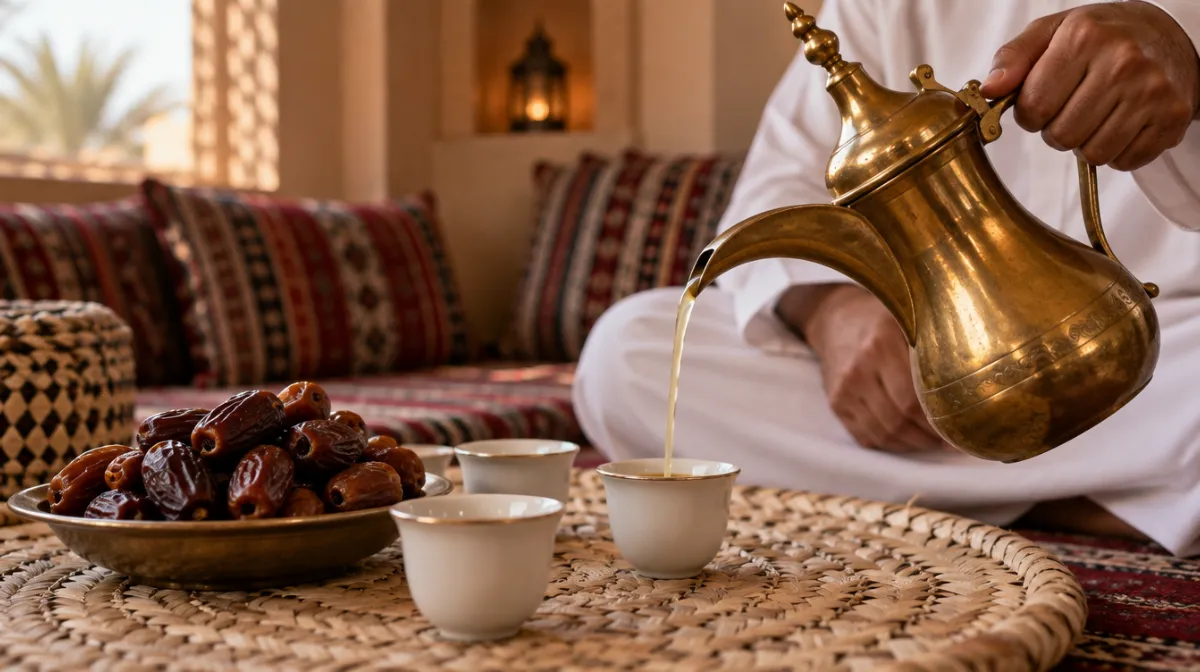
Gahwa is Arabic coffee as it’s served in the UAE: lightly roasted beans brewed with cardamom, often with saffron, poured from a dallah (a long-spouted coffee pot) into small handleless cups and served with dates. It isn’t just a drink. Offering gahwa is how Emiratis welcome guests, and the way it’s poured and accepted follows customs that are centuries old. UNESCO recognised Arabic coffee as a symbol of generosity in 2015, in a joint nomination by the UAE, Saudi Arabia, Oman and Qatar.
What gahwa tastes like
If you’re expecting espresso, gahwa will surprise you:
- Colour: pale golden to light brown, because the beans are only lightly roasted.
- Flavour: fragrant and slightly bitter, led by cardamom, with floral notes from saffron or rose water.
- Texture: thin and clear, with no crema and no milk.
- Sweetness: none. The sweetness comes from the dates served alongside.
The equipment
| Item | What it’s for |
|---|---|
| Dallah | The iconic brass or steel pot used to serve; it also appears on the UAE one dirham coin |
| Finjan | A small handleless cup, holding just a few sips |
| Roasting pan and mortar | Traditionally used to roast the beans over a fire and pound them with spices |
| Thermos flask | The modern everyday way to keep gahwa hot at home and in offices |
How to make gahwa at home
This makes enough for six to eight small cups.
You’ll need: 750 ml water, 3 tablespoons of lightly roasted ground Arabic coffee, 1 to 1½ tablespoons of freshly ground cardamom, a pinch of saffron and, optionally, 2 whole cloves or a few drops of rose water.
- Boil the water in a saucepan or coffee pot.
- Add the coffee and simmer gently for 10 to 15 minutes. Watch it, because it can foam up and boil over.
- Let it settle off the heat for a minute or two so the grounds sink.
- Add the aromatics. Put the cardamom, saffron and cloves in your serving pot or flask.
- Pour carefully through a fine strainer into the serving pot, leaving the sediment behind, and let it steep for a few minutes.
- Serve hot in small cups with a plate of dates.
Ready-roasted Arabic coffee blends, often pre-mixed with cardamom, are sold in supermarkets and spice shops across Dubai. Ask for a light roast.
The etiquette of serving and drinking
The customs vary a little between families and occasions, but these are widely observed:
- The server stands and holds the dallah in the left hand and the cups in the right, serving with the right hand.
- Guests are served in order, usually starting with the eldest or most important person present, or from the right.
- Cups are only partly filled, a few sips at a time, so the coffee stays hot and can be refilled. A full cup can come across as a hint to leave.
- Accept and drink with your right hand.
- Refills keep coming until you signal you’ve finished by gently shaking the cup from side to side before handing it back.
- One to three cups is typical. Accepting at least one is polite; declining everything can seem cold.
Gahwa and dates
Dates and gahwa are a classic pairing: the sweet, sticky fruit balances the bitter, spiced coffee. Soft, caramel-like Khalas dates are a favourite in the UAE. Our guide to dates in the UAE covers the varieties and how to choose them.
Gahwa compared with other coffees and teas
| Drink | Roast and preparation | Served with |
|---|---|---|
| Gahwa (Arabic coffee) | Light roast, simmered with cardamom and saffron, strained | Dates |
| Turkish coffee | Dark roast, very fine grind, boiled with the grounds left in the cup | Often sugar, sometimes sweets |
| Espresso | Dark or medium roast, pressure-brewed | Milk or sugar optional |
| Karak | Not coffee: strong black tea boiled with milk, sugar and cardamom | Paratha or snacks |
If you love the sweet, milky side of Dubai’s drinks culture, read our guide to karak chai.
When you’ll be offered gahwa
- At homes and majlis gatherings, as soon as guests arrive
- In hotels, where gahwa and dates are often offered on arrival
- At weddings, Eid visits and condolence gatherings
- During Ramadan, when many people break their fast with dates and water before gahwa; see our guide to iftar in Dubai
Where to try it in Dubai
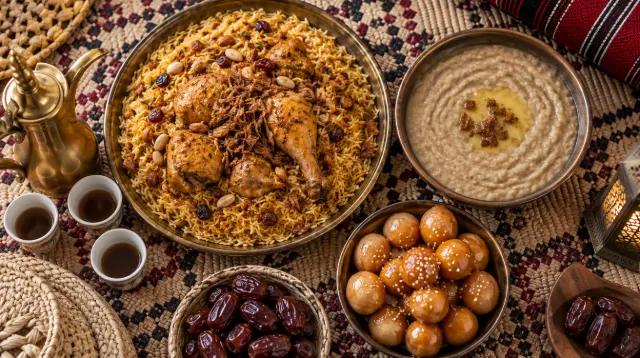
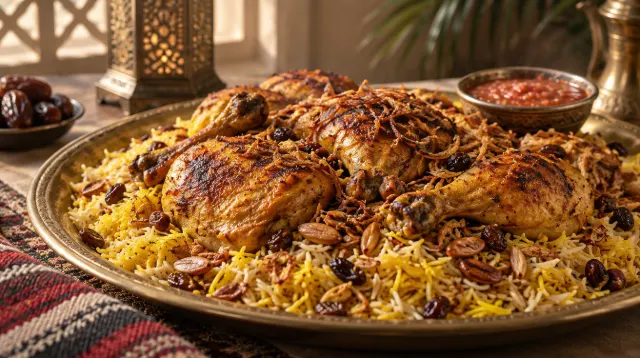
Emirati restaurants, heritage cafés in the Al Fahidi and Al Seef areas and cultural centres that host traditional meals are good places to try gahwa and ask about the customs. Many serve it alongside an Emirati meal such as machboos. For a wider tour of local flavours, see Emirati dishes to try.
Frequently asked questions
Does Arabic coffee contain caffeine?
Yes. It’s made from coffee beans, so it contains caffeine, although the small cups mean each serving is modest.
Why is the cup only partly filled?
A small pour keeps the coffee hot and lets the host keep refilling, which is part of showing generosity. It’s the opposite of stinginess.
Is it rude to refuse Arabic coffee?
Declining politely is fine, but accepting at least one cup is appreciated. When you’ve had enough, gently shake the cup before handing it back.
Sources

Every article is edited by a human and checked against our editorial policy. Spotted a mistake? Tell us.