A Guide to Dates in the UAE: Varieties, Buying and Eating
A guide to dates in the UAE: popular varieties such as Khalas and Medjool, the stages of ripeness, how to buy and store dates, and ways to eat them.
Key takeaways
- The date palm is central to Emirati heritage; dates are served with coffee, used to break the fast and given as gifts.
- Khalas, Khenaizi, Fard and Lulu are popular Emirati varieties; Medjool and Sukkari are widely sold too.
- Buy plump, glossy dates with no sour smell, and store fully ripe dates airtight in the fridge for the longest life.
On this page
Dates are the UAE’s oldest and most loved food. For centuries, the date palm provided fruit, shade, building materials and trade, and today dates still appear at almost every Emirati occasion: beside a cup of Arabic coffee, at the moment the fast is broken in Ramadan and in beautifully boxed gifts at Eid. Here’s how to tell the varieties apart, buy good ones and enjoy them.
Why dates matter in the UAE
The date palm is part of national identity. In 2019 UNESCO added the knowledge, skills and traditions of the date palm to its intangible heritage list, in a joint nomination that included the UAE. Farming families in oasis towns such as Al Ain and Liwa have grown dates for generations, and the Liwa Date Festival in Abu Dhabi’s Al Dhafra region celebrates the harvest each summer with competitions for the best fruit.
Fresh dates ripen in the summer heat, roughly from June to September, so that’s the season to try them soft and fresh from the palm.
Popular varieties
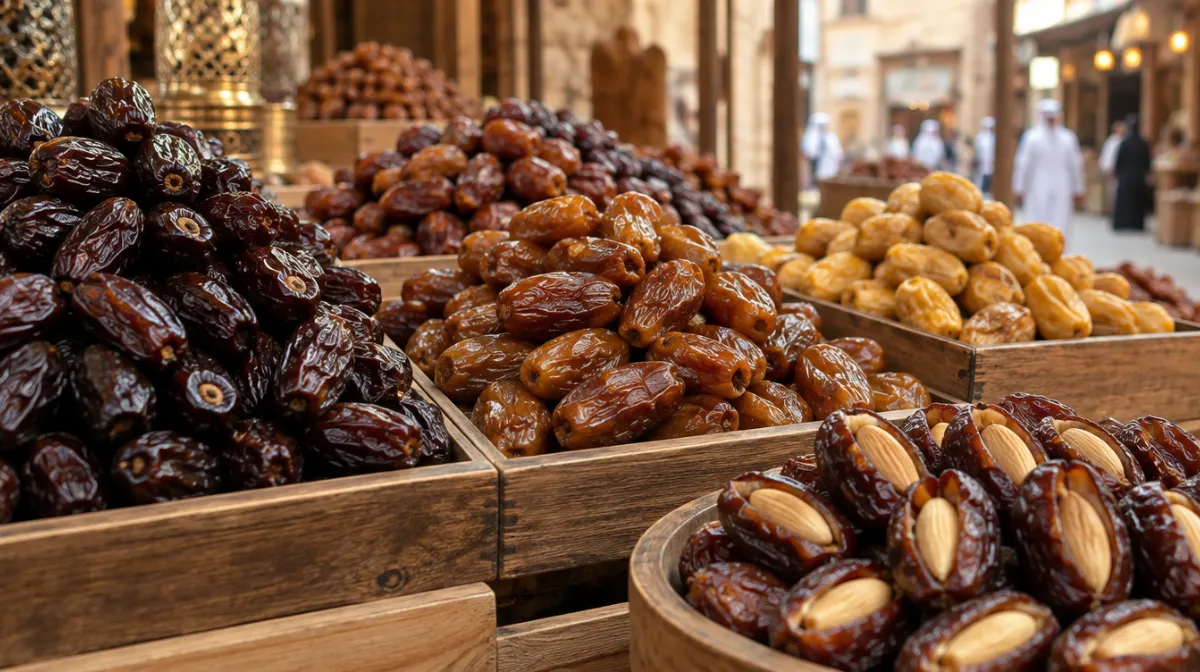
| Variety | Look and taste | Good for |
|---|---|---|
| Khalas | Amber to brown, soft, rich caramel flavour; highly prized in the UAE | Serving with gahwa |
| Khenaizi | Dark red-brown, soft and sweet | Everyday snacking |
| Fard | Dark, firmer and less sticky; keeps well | Storing and cooking |
| Lulu | Small, round and very sweet | Snacking and gifts |
| Sukkari | Golden, very sweet, sometimes crisp and sugary | Dessert-style eating |
| Medjool | Large, soft and fudgy | Stuffing |
| Barhi | Round; eaten fresh and crunchy when yellow | Summer, fresh on the branch |
| Ajwa | Small, dark and soft, from Madinah | Gifts, especially in Ramadan |
The stages of ripeness
Dates change dramatically as they ripen, and in the UAE each stage has its own name:
- Kimri: green, hard and not yet edible.
- Khalal: yellow or red, crunchy and slightly astringent. Barhi is enjoyed at this stage.
- Rutab: partly ripe, soft and juicy, often half brown and half yellow. These are the prized fresh dates of summer.
- Tamr: fully ripe and naturally dried on the palm. This is the stage most dates are sold at, and it keeps longest.
How to buy good dates
- Look for plump, glossy fruit with even colour and skin that isn’t split or broken.
- Smell them. A sour or alcoholic smell means fermentation.
- Check for sugar crystals. A little white crystallisation on the skin is natural sugar and harmless, but combined with a hard, dry texture it points to old stock.
- Taste before you buy at souqs and date shops, where tasting is normal.
- Buy loose for eating and boxed for gifts. Premium boxes cost more for presentation, not always for better fruit.
- Check the label for variety, origin and packing or expiry date on packaged dates.
The Waterfront Market in Deira, dedicated date shops and large supermarkets all carry a wide range, with prices that vary by variety, grade and season.
How to store dates
| Type | Where | Roughly how long |
|---|---|---|
| Fresh (rutab) | Fridge, in a container | A few days to a week |
| Ripe (tamr) | Airtight container at cool room temperature | A few weeks |
| Ripe (tamr) | Airtight container in the fridge | Several months |
| Ripe (tamr) | Freezer | Up to about a year |
Let chilled dates come to room temperature before serving; they soften and taste sweeter.
Ways to eat dates
- With Arabic coffee. The classic pairing; see our guide to gahwa.
- Stuffed with almonds, walnuts, tahini or a little cheese.
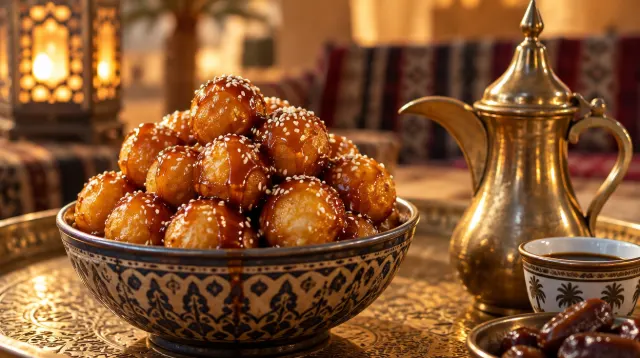
- As date syrup (dibs), drizzled over luqaimat or pancakes.
- In desserts and bakes, such as date cakes, energy balls and maamoul-style biscuits.
- Blended into milkshakes or smoothies with milk or laban.
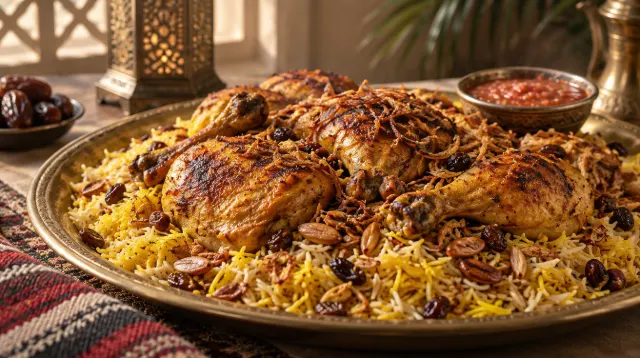
- With savoury food, chopped into salads or cooked into stews, much as raisins top a platter of machboos.
Dates in Ramadan
Many Muslims break their fast with dates and water at sunset, following the example of the Prophet Muhammad. Every iftar table in the UAE starts with a plate of dates, and date sales peak in the weeks before Ramadan. Our guide to iftar in Dubai explains what to expect.
A note on nutrition
Dates are naturally high in sugar and also provide fibre and potassium. They make a satisfying sweet snack, but portions add up quickly. If you have diabetes or are managing your blood sugar, follow the advice of your doctor or dietitian on how many to eat.
Dates as gifts
Boxes of premium dates are a traditional gift for Eid, Ramadan visits and business meetings. Look for a mix of varieties, stuffed dates or chocolate-coated dates, and check the packing date if you’re buying ahead. For other flavours worth exploring, see our list of Emirati dishes to try.
Frequently asked questions
Which dates are the best?
It depends on taste. Khalas is a favourite in the UAE for its caramel flavour, Medjool is loved for its size and soft texture, and Sukkari for its intense sweetness. Try a mixed box to find yours.
When is date season in the UAE?
Fresh dates are harvested in summer, roughly June to September. Dried, fully ripe dates are available all year.
Do dates need to be refrigerated?
Fully ripe dried dates keep for weeks in an airtight container somewhere cool, but they last much longer in the fridge. Soft fresh dates should always be refrigerated.
Sources

Every article is edited by a human and checked against our editorial policy. Spotted a mistake? Tell us.