Cheap Eats in Dubai: Where Locals Actually Eat, Neighbourhood by Neighbourhood
Where to find cheap eats in Dubai by neighbourhood: Karama, Satwa, Deira, Al Rigga, Bur Dubai and more, what each does best and budget tips.

A guide to iftar in Dubai during Ramadan: the traditions of breaking the fast, dishes to try, types of iftar from tents to home-style, etiquette and booking.
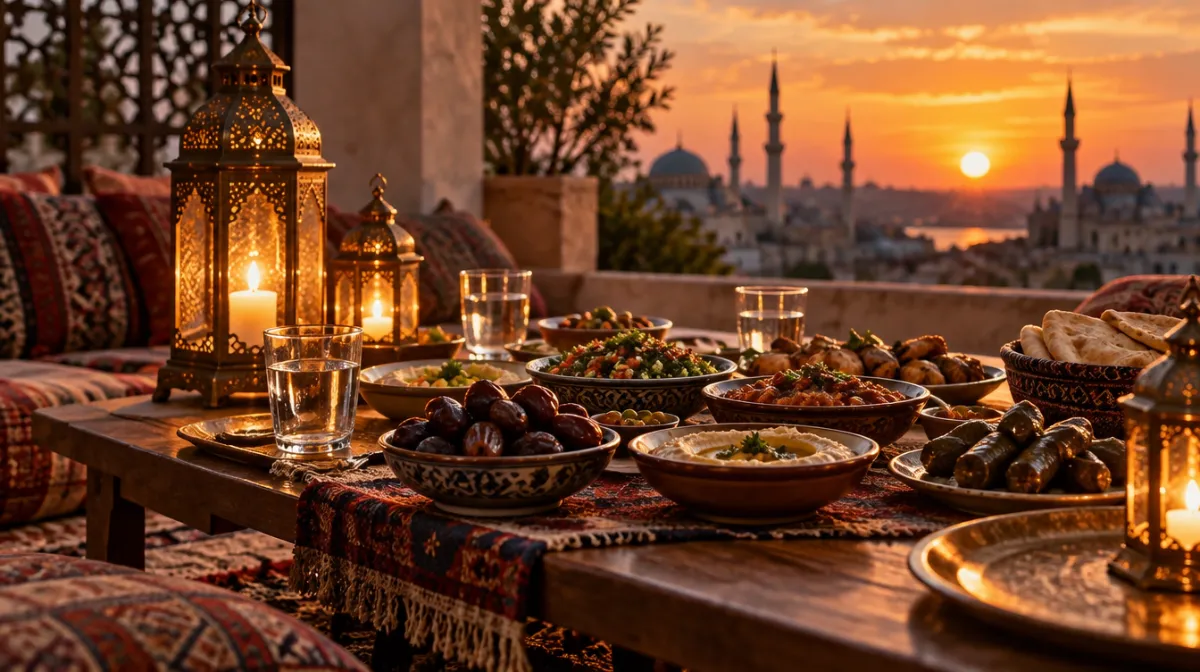
During Ramadan, Dubai’s evenings revolve around iftar, the meal that breaks the day’s fast at sunset. It’s one of the most welcoming food experiences of the year, and visitors are warmly invited to share it.
The fast is traditionally broken with dates and water or laban (a yoghurt drink), followed by prayer and then a larger meal. Later at night, some people gather for suhoor, the pre-dawn meal.
Our Emirati dishes guide explains each in more detail.
| Type | What to expect |
|---|---|
| Hotel Ramadan tents | Large buffets, live cooking, traditional décor |
| Restaurant set menus | Fixed-price menus of traditional and international dishes |
| Home-style and heritage venues | Emirati cooking in traditional settings |
| Cultural centres | Iftar with explanations of customs and Q&A |
| Community iftars | Free meals shared at mosques and community tents |
Yes. Visitors of all backgrounds are welcome at iftars, and many venues offer them.
At sunset, which changes daily. Check the local prayer timetable.
Iftar breaks the fast at sunset; suhoor is the meal eaten before dawn, before fasting begins.

Every article is edited by a human and checked against our editorial policy. Spotted a mistake? Tell us.
Where to find cheap eats in Dubai by neighbourhood: Karama, Satwa, Deira, Al Rigga, Bur Dubai and more, what each does best and budget tips.
How Friday and weekend brunch works in Dubai: styles from family buffets to beach parties, what packages include, how to choose by budget and etiquette tips.
The story of karak chai, the strong spiced milky tea loved across the UAE: its South Asian roots, how it’s made, a simple recipe and where to find the best.