Vegetarian and Vegan Eating in Dubai: A Practical Guide
How to eat well as a vegetarian or vegan in Dubai: naturally meat-free cuisines, dishes to order, hidden animal ingredients to ask about, and shopping tips.
Key takeaways
- Dubai is an easy city for vegetarians thanks to South Indian, Gujarati and Levantine restaurants.
- Vegans should ask about ghee, butter, yoghurt, egg, meat stock and fish sauce, which hide in many dishes.
- Supermarkets stock plant-based milks, tofu and meat alternatives, and menus increasingly label vegan dishes.
On this page
Dubai is one of the easier big cities in the region to eat as a vegetarian, and it’s increasingly good for vegans too. Two things help: a large South Asian community, with hundreds of Indian restaurants where vegetarian cooking is the norm, and the Levantine mezze tradition, where many dishes are meat-free by default. The main challenge is hidden animal ingredients, such as ghee, butter, stock and egg, so it pays to know what to ask.
Naturally vegetarian-friendly cuisines
| Cuisine | Why it works | Watch out for |
|---|---|---|
| South Indian | Dosa, idli, vada, sambar and rasam are traditionally vegetarian | Ghee on dosas, yoghurt in some chutneys |
| Gujarati and Rajasthani | Whole restaurants serve vegetarian thalis | Plenty of ghee, butter, milk and paneer |
| Levantine | Hummus, mutabbal, falafel, fattoush, tabbouleh and stuffed vine leaves | Yoghurt sauces, butter in rice, meat-stuffed variants |
| Ethiopian | Lentil and vegetable stews with injera, often vegan | Butter (niter kibbeh) in some dishes |
| Thai and Chinese | Tofu and vegetable dishes are widely available | Fish sauce, oyster sauce and shrimp paste |
| Emirati | Lentil soup, breads and sweets | Most mains are meat or fish, and rice is often cooked in meat stock |
Karama, Bur Dubai and Meena Bazaar have the highest concentration of vegetarian Indian restaurants; our cheap eats by neighbourhood guide maps them.
What to order
Vegetarian
- South Indian: masala dosa, idli with sambar, uttapam, vegetable biryani
- North Indian: paneer tikka, dal makhani, chana masala, palak paneer
- Levantine: halloumi, cheese manakish, fatayer with spinach, labneh
- Emirati: regag with cheese, luqaimat, lentil soup (check the stock)
Vegan
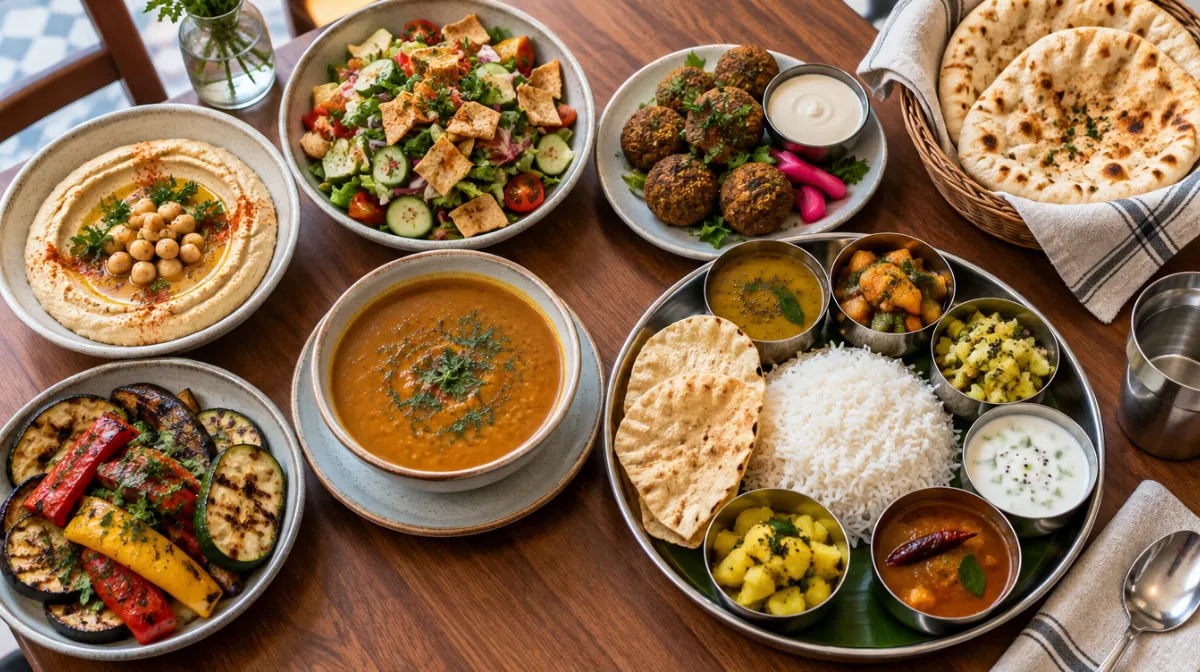
- Levantine: hummus, falafel, baba ghanoush, fattoush, tabbouleh and zaatar manakish made with oil (mutabbal sometimes contains yoghurt, so ask)
- South Indian: idli, plain dosa cooked with oil, sambar, coconut chutney
- Indian curries: chana masala, aloo gobi and bhindi masala, when cooked with oil instead of ghee or cream
- Ethiopian: misir wat (spiced lentils), shiro (chickpea stew), vegetable combinations with injera
Hidden animal ingredients to ask about
| Ingredient | Where it hides |
|---|---|
| Ghee and butter | Indian breads, dals, rice dishes, dosas and many sweets |
| Meat or chicken stock | Rice dishes such as machboos, soups and some sauces |
| Yoghurt and cream | Curries, marinades, dips and dressings |
| Egg | Breads, pastries, desserts and some garlic sauces |
| Fish sauce and shrimp paste | Thai, Vietnamese and some Chinese dishes |
| Gelatine | Jellies, gummies, mousses and some desserts |
| Animal rennet | Some hard cheeses, which matters to strict vegetarians |
| Honey | Desserts, dressings and drinks (not vegan) |
Brunches, hotels and fine dining
Many hotel restaurants and brunches now label vegetarian and vegan dishes, and chefs can often adapt a set menu with notice. When you book, mention your diet so the kitchen can prepare. Our Dubai brunch guide explains how brunches work and what they typically include.
Supermarkets and home cooking
Large supermarkets carry plant-based milks, tofu, tempeh, vegan cheese, meat alternatives and a wide range of pulses and spices. Indian grocers in Karama and Bur Dubai are excellent for lentils, flours, spices and fresh vegetables at lower prices.
Check labels on imported products. Ingredients lists usually appear in Arabic and English, and allergen information on pre-packed foods is required.
Delivery and cloud kitchens
Delivery apps let you filter by vegetarian or vegan and read reviews before you order. Delivery-only brands have added many plant-based concepts in recent years; if you’re curious how they work, see our guide to cloud kitchens in Dubai.
Ramadan and iftar
During Ramadan, iftar buffets always include dates, lentil soup, salads, mezze and vegetable dishes, so vegetarians eat well. Vegans should still ask about ghee and stock in rice and soups. See our guide to iftar in Dubai for what to expect.
Eating out with a mixed group
Levantine and Indian restaurants work well when meat-eaters and vegetarians dine together. Order a spread of mezze or a mix of curries to share, and ask the kitchen to keep vegetarian dishes separate from meat when they’re served. At Indian vegetarian restaurants, the whole menu is meat-free, so everyone can order freely.
Tips for travellers
- Pack a few snacks such as nuts and bars for long days out.
- Use review apps and search for “vegetarian” or “vegan” with a neighbourhood name.
- Street food helps: falafel wraps, samosas and chaat are easy meat-free snacks; see our street food guide.
- Ask confidently. Dietary questions are routine in a city with so many cuisines.
Frequently asked questions
Is it easy to be vegan in Dubai?
Easier than many people expect. Levantine, South Indian and Ethiopian restaurants have many naturally vegan dishes, and supermarkets stock plant-based staples. The key is asking about ghee, butter and stock.
Is Arabic food vegetarian-friendly?
Levantine mezze is very vegetarian-friendly. Gulf and Emirati main dishes are mostly meat or fish, although breads, soups and sweets are often suitable.
Are there fully vegetarian restaurants in Dubai?
Yes, particularly Indian vegetarian restaurants in Karama, Bur Dubai and Meena Bazaar, and a growing number of plant-based cafés elsewhere in the city.
Sources

Every article is edited by a human and checked against our editorial policy. Spotted a mistake? Tell us.