Starting a Home-Based Food Business in the UAE
How to start a home food business in the UAE legally: licence routes, municipality approval, kitchen standards, labelling, selling online and when to scale up.
Key takeaways
- Selling homemade food needs both a licence for the activity and food safety approval from the municipality.
- General home-business or e-commerce licences usually don’t cover food preparation, so check the exact activity.
- Start with lower-risk foods such as baked goods, label every product clearly and plan when to move to a commercial kitchen.
On this page
Many successful UAE food brands started in a home kitchen, selling cakes, luqaimat or spice mixes to friends and followers. But selling food commercially from home without the right permissions isn’t allowed. You need a licence for the business activity and food safety approval from the municipality, and some popular home-business licences don’t cover food at all. Requirements also differ between emirates. Here’s how the process generally works, using Dubai as the example.
Why getting licensed matters
- It’s the law. Unlicensed food sales can lead to fines and closure.
- Customers trust it. A permit number on your label reassures buyers.
- Platforms require it. Delivery apps, shops and corporate clients usually ask for a trade licence and food permits.
- It protects you. Clear standards reduce the risk of making someone ill.
The main licence routes
| Route | Who it suits | Food preparation allowed? |
|---|---|---|
| Home business licences for UAE nationals (in Dubai, the Intelaq programme) | Emirati entrepreneurs starting small | Depends on the activity and municipality approval |
| Home-based food permits from the municipality | Home cooks producing approved, lower-risk foods | Yes, within the approved scope |
| E-commerce or social media seller licences (such as Dubai’s e-Trader) | Online sellers of non-food goods and services | Generally no; food preparation isn’t covered |
| Commercial kitchen with a food trade licence | Growing brands with higher volumes | Yes |
Eligibility, fees and the list of permitted activities change, so confirm the current rules with the Department of Economy and Tourism (DET) and Dubai Municipality, or your own emirate’s authorities, before you spend money.
What municipality approval usually involves
In Dubai, home-based food businesses are handled through Dubai Municipality’s food safety systems. Published guides describe a process along these lines:
- Register and apply online with your Emirates ID and residence details, such as your tenancy contract and Ejari.
- Submit a kitchen layout showing storage, preparation and washing areas.
- Complete food safety training and provide the certificate.
- Pass a kitchen inspection covering cleanliness, ventilation, refrigeration, pest control and separation of raw and ready-to-eat foods.
- Stick to approved products. Higher-risk foods, such as raw seafood and unpasteurised dairy, are typically not allowed from home kitchens.
Treat this as an outline and check the official requirements for your situation. Our guide to Dubai Municipality food safety rules explains the standards that apply to all food businesses.
Kitchen standards checklist
- A fridge running at 5°C or below, with a thermometer
- Separate storage for business ingredients, clearly labelled
- Handwashing facilities with soap and paper towels
- Clean, intact surfaces that are easy to sanitise
- No pets in the kitchen and a regular pest-control routine
- Separate boards and utensils for raw and ready-to-eat foods
- An allergen plan, so nuts or sesame don’t end up where they shouldn’t
- Simple records: temperatures, cleaning and supplier receipts
Labelling and packaging
Every product you sell should carry a clear label. Pre-packed food in the UAE is expected to be labelled in Arabic, usually with English alongside.
| Label item | Why it matters |
|---|---|
| Product name | Tells buyers exactly what it is |
| Ingredients, in descending order by weight | Required for informed choices |
| Allergens, highlighted | Nuts, milk, eggs, wheat, sesame and others can cause serious reactions |
| Net weight or quantity | Fair trading |
| Production and expiry dates | Safety and freshness |
| Storage instructions | For example, “keep refrigerated” |
| Producer name, contact and permit number | Traceability and trust |
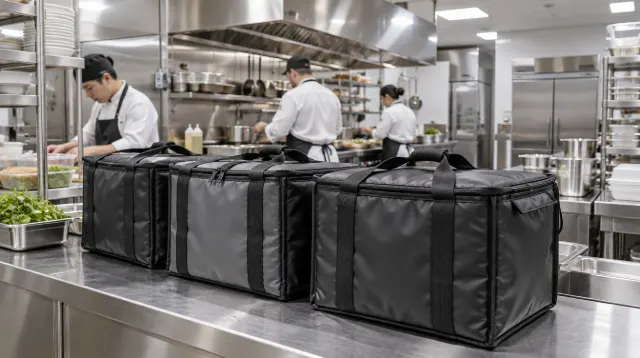
Use food-grade packaging that protects the product in the heat, and add ice packs or insulated bags for anything that needs chilling.
Good products to start with
Lower-risk, shelf-stable products are the easiest to approve, make and deliver:
- Baked goods: cookies, brownies, breads and cakes without fresh-cream fillings
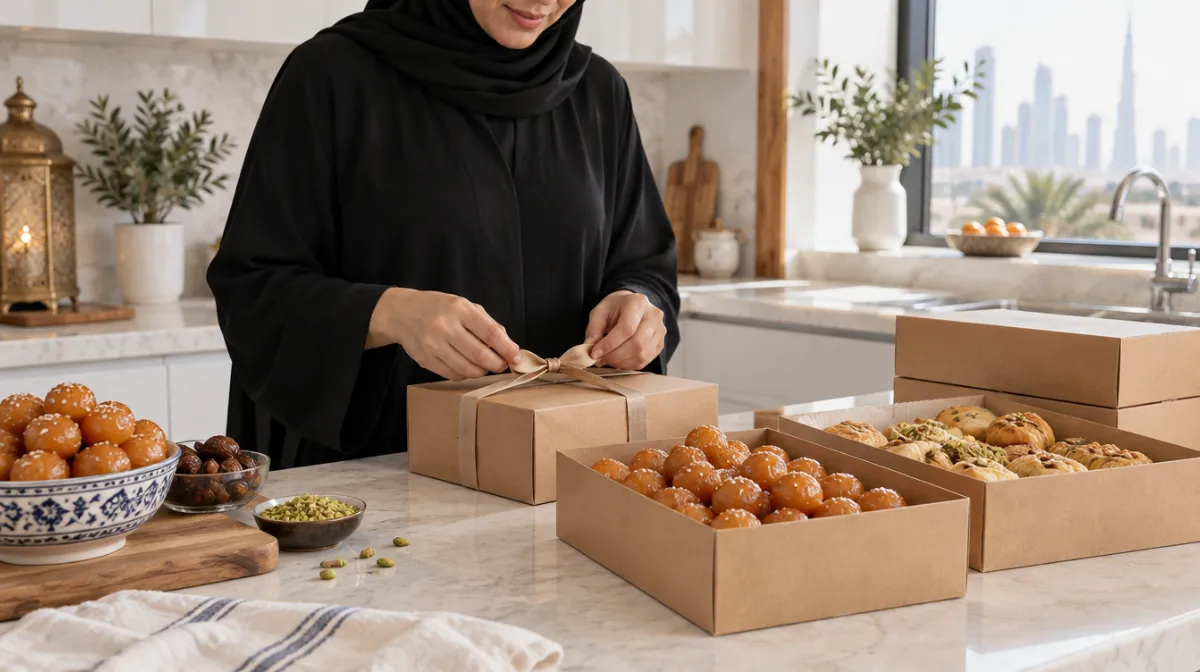
- Emirati sweets: luqaimat and date-based treats; see our guide to dates in the UAE
- Spice blends: bzar and other mixes, which pair with recipes like machboos
- Granola, nuts and snack mixes
Be cautious with meat, fish, fresh dairy desserts and anything that needs strict temperature control; these carry more risk and more rules.
Pricing your products
Work out the full cost of each item: ingredients, packaging, labels, delivery, platform fees and your time. Then set a price that leaves a real profit. Our guide to menu pricing and food cost shows the formulas restaurants use, and they work for home businesses too.
Where and how to sell
- Social media and messaging: Instagram and WhatsApp orders are common. Keep your permit number in your profile.
- Markets and pop-ups: weekend markets and events usually need their own permits.
- Delivery apps: usually require a trade licence and food permits; our guide to food delivery apps in the UAE explains the fees.
- Corporate and event orders: offices and party planners value reliable, licensed suppliers.
When to scale up
Signs you’ve outgrown your kitchen: you’re turning orders away, working through the night or storing stock in every cupboard. The usual next step is a shared or cloud kitchen, which provides commercial space with the right infrastructure, or a full food trade licence for your own premises.
Frequently asked questions
Can expats run a home food business in Dubai?
Home-business routes have widened in recent years, but eligibility depends on the licence type and your circumstances. Check the current rules with DET and Dubai Municipality before you start.
Can I sell food on Instagram without a licence?
No. Selling food commercially requires the right licence and food safety approval, whatever the sales channel.
Do I need a food safety certificate?
Food handlers are generally expected to have recognised food safety training, and it’s usually part of the application for a home-based food permit.
Sources

Every article is edited by a human and checked against our editorial policy. Spotted a mistake? Tell us.